F6AGV

Actualité et promotion du radioamateurisme

jeudi 16 février 2012

INSTALLER une fiche SMA

Câble RG58 :  quelques adresses
http://www.rgfrance.eu/index.php?main_page=index&cPath=2_20004

http://www.cbplus.com/cat/product263/product_info.html

http://www.radiodxcenter.fr/cables-coaxiaux/603-rg-58-standard-au-metre.html

http://www.datasheetarchive.com/RG-58-datasheet.html


Contact: f6agv AT free.fr

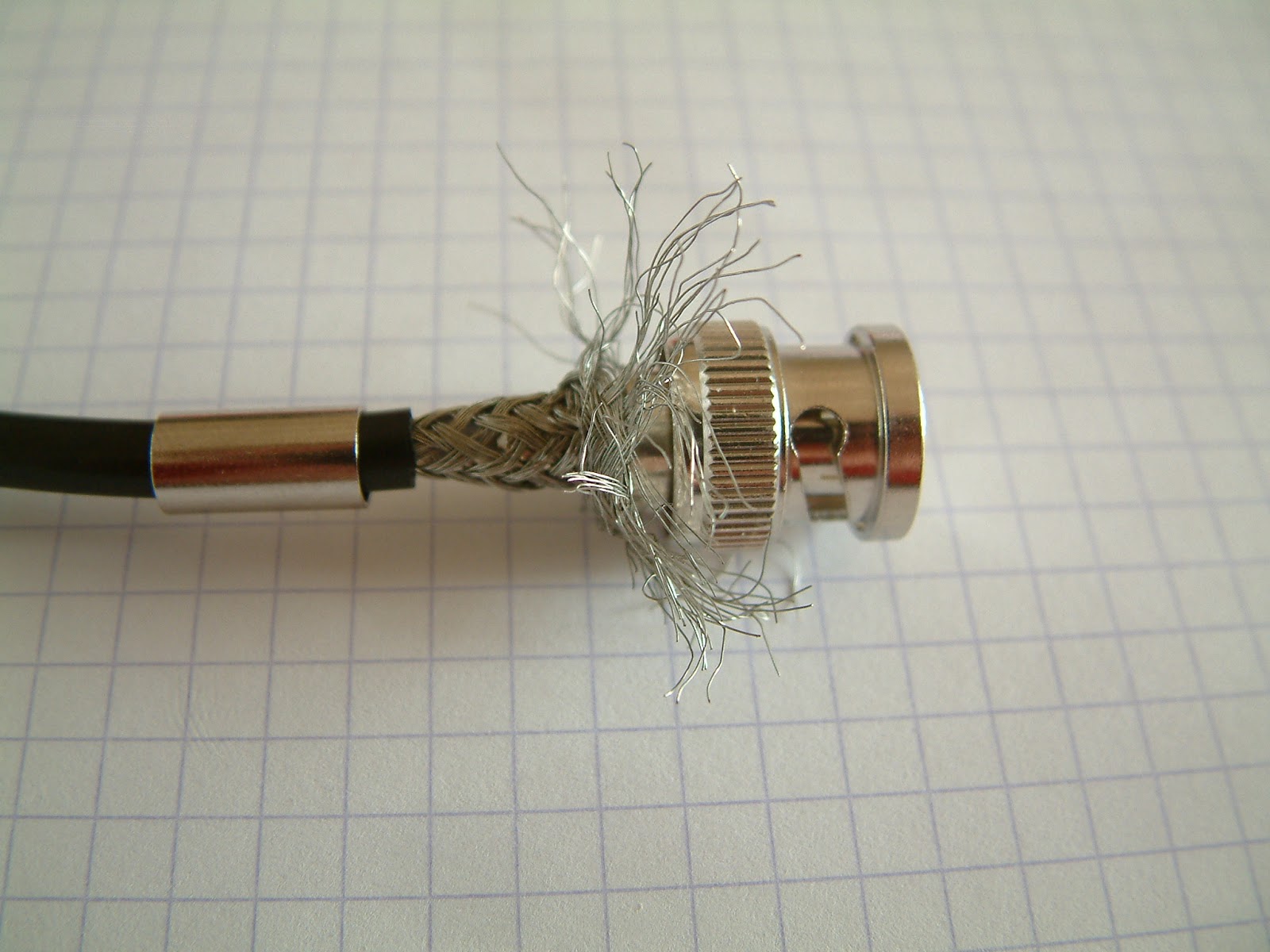
INSTALLER une BNC

Le papier est quadrillé 5x5 mm

Contact : f6agv AT free.fr

TOUR DU MONDE dans son fauteuil avec GOOGLE EARTH

L'étoile ou Arc de Triomphe, Paris.
Bagdad
La citadelle Vauban Lille
Cap Canaveral 
Chicago
Chicago
Newark
San Diego1
San Diego2
San Diego3
San Francisco1
San Francisco2
La Tour Effel Paris

Contact:  f6agv AT free.fr

WEBCAM CONCORDIA diaporama qui commence


Contact :  f6agv AT free.fr

mercredi 15 février 2012

TRUCS ET ASTUCES INFORMATIQUE WINDOWS XP

Dans les stations radioamateurs, nous allons trouver des systèmes sous Windows XP.
Une série d'articles va commencer avec comme thème TRUCS et ASTUCES.
Ma réserve est impressionnante et je me limiterais à l'essentiel pour dépanner un PC qui vient de lâcher, par suite d'une panne, ou d'une attaque de virus, un formatage, ou une recherche de performances pour augmenter par exemple la rapidité au démarrage et au cours des exécutions des applications.
L'ordinateur est maintenant un élément indispensable d'une station radioamateur.
Encore une fois, les radioamateurs français "bien pensants" et "politiquement corrects" se sont plantés lamentablement. Tout le monde a été confronté à ces paroles, relayées comme des "hoax" !

http://fr.wikipedia.org/wiki/Hoax

La radio c'est fini, on va tous passer sur Internet !  Les jeunes ne vont plus que sur Internet...

Il est vrai que la présence d'un ordinateur change la vie du radioamateur mais il est là pour faciliter le trafic, remplir le log, recevoir des données numériques, textes, photos, vidéos, forums, listes, sites, blogs...
On ne compte plus les logiciels et les applications pour les radioamateurs.
Évidemment, dans certains domaines les radioamateurs français sont à la traîne comme toujours.
Au lieu de foncer et de travailler dans des innovations, ils critiquent, sèment le découragement, le doute, et en définitive copient volontiers ce que les "autres" ont faits !

Mais c'est un autre débat!  Ce qui est inadmissible, c'est de colporter des idioties comme la radio, n'existe plus avec Internet... Ces propos sont-ils volontairement destructeurs, je pense qu'il y a une part de personnes que ça doit arranger de voir disparaître les radioamateurs et le radioamateurisme, pour diverses raisons.
Le remplacer par autre chose, l'orienter vers d'autres utilisations, récupérer des avantages, ou des fréquences. Une autre part de personnes qui relayent ces mots d'ordre, sans penser aux conséquences parce que c'est dans l'air et qu'on a rien d'autre à proposer...

Bref, l'ordinateur est un complément formidable de toute station moderne, et son rôle ne fera que s'amplifier.
Un temps assez considérable est perdu, quand un problème survient, et souvent le radioamateur se trouve seul face à une complexité des composants internes dans la machine. Il faut savoir mettre les mains dans le cambouis !  On a pas encore inventé l'ordinateur qui dépanne un autre ordinateur.
A ma connaissance? Mais ce qui est utopique aujourd'hui, donc dénigré par la foule des radioamateurs septiques sera couramment utilisé demain ! On l'a toujours vu, de l' AM à la BLU, de la CW ou du RTTY  au PACKET, du PACKET à l' APRS. Toujours des détracteurs... Une plaie typiquement franco-française.
Ce qui se produit toujours, c'est qu'ailleurs, ils le font et que finalement nous nous y mettons mais avec 5 à 10 de retard ! Exemple sur les activités ballons en France ! Les français n'ont pas encore compris... Il ne s'agit pas d'envoyer en l'air des baudruches gonflées à l'hélium mais de construire des nacelles chargées d'électronique: ce qui s'appelle "PAYLOAD" pour ceux qui connaissent...

On peut méditer là dessus, et constater que le radioamateur de base n'est qu'un utilisateur de technologie et consommateur d'appareils, d'où une dérive vers la radio dite de " LOISIR".
Il faut combattre cette idée car elle enfermerait le radioamateurisme dans une boite de plus en plus petite!
A terme, ce serait la mort de toute activité inventive, innovante et expérimentale, ce qu' y a  toujours  été reconnue dans cette passion depuis les origines et qui fait son charme.

Donc, méfions nous des "ayatollahs" et des "slogans" négateurs, même si c'est une association qui le prétend,   la première chose à savoir c'est si elle défend le radioamateurisme ou elle même ?
Si ce n'est pas le cas, ne pas adhérer et aller voir ailleurs !

Tout ceci en préambule pour exprimer le fait que l'ordinateur dans une station radio est devenu INDISPENSABLE pour de plus en plus de raisons.
Le "PC" est relié aux postes de radio par des cordons spéciaux, (CAT, RS232,USB, WIFI, AUDIO, PORT PARALLELE... )

Nous devons avancer dans tout ce qui concerne les interfaçages avec l'extérieur (MOTEURS, STATIONS METEO, DONNES des BALLONS RADIOAMATEURS, SATELLITES, LINKS, RELAIS, TELECOMMANDES...).

La série TRUC et ASTUCES doit permettre une maintenance plus rapide, plus efficace, plus adaptée,
des réglages, des installations... N'hésitez pas à participer, si vous voulez bien. ALL is possible !


TRUC ET ASTUCES :   STATION RADIOAMATEUR

1.Rechercher des DLL manquantes :
Cliquez Démarrer
Exécuter
Tapez la commande  sfc/scannow
Le CD d’installation de WINDOWS XP est nécessaire.

2.Des fichiers se bloquent :
Cliquez droit
Renommer sans extension
Essayez de le supprimer.

3.Terminer le processus en cas de blocage :
Message  ….. ne réponds pas
Mettre fin à une application en faisant
Appuyez simultanément sur  CTRL + ALT + SUPPR
La fenêtre gestionnaire des tâches apparaît
Cliquez sur Processus
Trouvez le fichier qui pose problème
Sélectionner
Cliquez sur terminer le Processus

4.Mode sans échec :
C’est un démarrage de WINDOWS XP qui va utiliser un minimum de pilotes
et de services.
Il est possible de réparer ce qui ne va pas avant le lancement de ce qui ne va pas.
A la mise en route du PC, tapez sur F8, avant la mise en route de WINDOWS XP.

5.WINDOWS se bloque avant l’apparition du bureau :
Appuyez sur F8
Choisir Dernière configuration connue
WINDOWS démarre en utilisant un point de restauration sauvé dans le registre.
Les modifications sont annulées quel que soit le problème.

6.Réparation de WINDOWS si celui devient instable :
Insérez le CD original de WINDOWS XP
Démarrez avec celui-ci dans le lecteur CD.
Appuyez sur F8
Puis sur R  pour Réparation sans toucher aux fichiers sauvegardés.
Exécutez une mise à jour de WINDOWS XP pour finir.

7.WINDOWS ne veut pas s’arrêter :
Des programmes refusent de se fermer
Attention vous allez travailler dans le registre ! Pas d’erreur possible !
Démarrer, exécuter
Lancez Regedit dans la petite fenêtre
Sélectionnez la clef  HKEY_USERS\.DEFAULT\Control Panel\Desktop
Cliquez à chaque fois sur le signe + 
Cliquez sur Desktop
Changez la valeur de 
AutoEndTasks  en  1  en cliquant droit  et faire modifier et  OK
Sortir avec le signe – sur la clef
Fermez
Cela évite le blocage du système et forcer WINDWOS à quitter les applications.

8.Démarrez plus rapidement le PC :
Les fichiers de démarrage peuvent être optimisés en les défragmentant.
Cliquez sur Démarrer, Exécuter
Tapez la commande   defrag c :-b 

9.Optimisez la carte son : 
Cliquez sur démarrer
Panneau de Configuration
Sons et Périphériques
Volume
Le nom de la carte son apparaît
Le volume du périphérique peut être réglé sur faible ou élevé
Testez le
Cochez la case « placer l’ icône de volume dans la barre des tâches »
Cliquez sur Bouton paramètres avancés.
Le panneau Contrôle du volume apparaît
Réglez les niveaux de chaque application ou cliquez sur Muet en bas, si non utilisé.
Testez le contrôle du volume
Exemple : niveau maximal sur l’entrée Ligne
Fermez
Exemple : cochez muet sur Synthé SW  (Midi)
Retour sur Sons et Périphériques
Cliquez  le bouton Audio
Fenêtre contrôle d’enregistrement
Réglez les niveaux des :
n      Lecteur CD
n      Entrée Ligne
n      Microphone
On ne peut cocher qu’une seule case. Vérifier votre entrée suivant l’application de votre entrée enregistrement.
Exemple : Microphone
Niveau maximal
Fermez
Sortir avec Appliquer et OK

10. Indexation des fichiers :
La mise à jour de la liste des fichiers de l’utilitaire « rechercher » ralentit le système.
Si vous voulez arrêter cette option
Dans Poste de Travail
Cliquez droit sur le disque dur utilisé  par exemple  C :
Propriétés
Onglet  général
Décochez la case « autoriser l’indexation de ce disque pour la recherche rapide de fichiers »
Fermez

11. Accélérer le menu Démarrer :
Cliquez le bouton Démarrer + Exécuter
Tapez Regedit
Sélectionnez la clef :  HKEY-CURRENT_USER\ControlPanel\Desktop
Cliquez sur Desktop
Trouvez MenuShowDelay dans la liste
Cliquez droit pour modifier
Placez la valeur 100  au lieu de 400
Sortir avec le signe -  sur la clef
Fermez

12. Programmes favoris : gérez la liste
Cliquez gauche sur le bouton Démarrer
La liste des raccourcis  apparaît à gauche
Cliquez droit sur n’importe quel raccourci
Choisissez l’option : «  Ajouter au menu démarrer »
Ou choisissez l’option :  « Supprimer de cette liste »
Sortir en cliquant à côté de la fenêtre

13. Supprimez la liste des documents récents :
Cliquez gauche sur le bouton Démarrer
Cliquez gauche sur  Exécuter
Tapez Regedit
Attention vous êtes dans le registre, pas d’erreur possible.
Sélectionner la Clef :  HKEY_CURRENT.USER\Sofware\Microsoft\Windows\CurrentVersion\Policies\Explorer
Cliquez sur Explorer
Cliquez droit dans la fenêtre à droite dans le centre, n’importe où
Un texte NOUVEAU >  apparaît
Cliquez dessus
Choisir VALEUR DWORD
Remplacer  le texte    nouvellevaleur#1
Par  «  NoRecentDocsMenu »
Cliquez à côté 
Cliquez gauche pour modifier
Entrez la valeur 1  pour la donnée  (hexa)
Sortir avec signe -  sur la clef
Fermez

14. Désactiviez  les effets visuels de WINDOWS XP :
Cliquez gauche sur le bouton Démarrer
Panneau de configuration
Double clic sur SYSTEME
Fenêtre Propriétés système apparaît
Onglet Avancé
Performances, effets visuels
Pointer sur Paramètres personnalisés
OK suivi de OK
Fermez 
15. Démarrage sans musique :
Cette musique ralentit le démarrage
Allez dans le Panneau de configuration
Cliquez sur Sons et Périphériques Audio
Propriétés de Sons et périphériques audio
Cliquez sur l’onglet Sons
Cliquez sur agrandir
En bas apparaît la mention :  « aucun »
Appliquez
OK
Fermez

A suivre,   

Contact :  f6agv AT free.fr

mardi 7 février 2012

RESTAURATION D'UN BCL : B147 à 5 tubes


 Nostalgie de la radio à tubes:  la TSF !

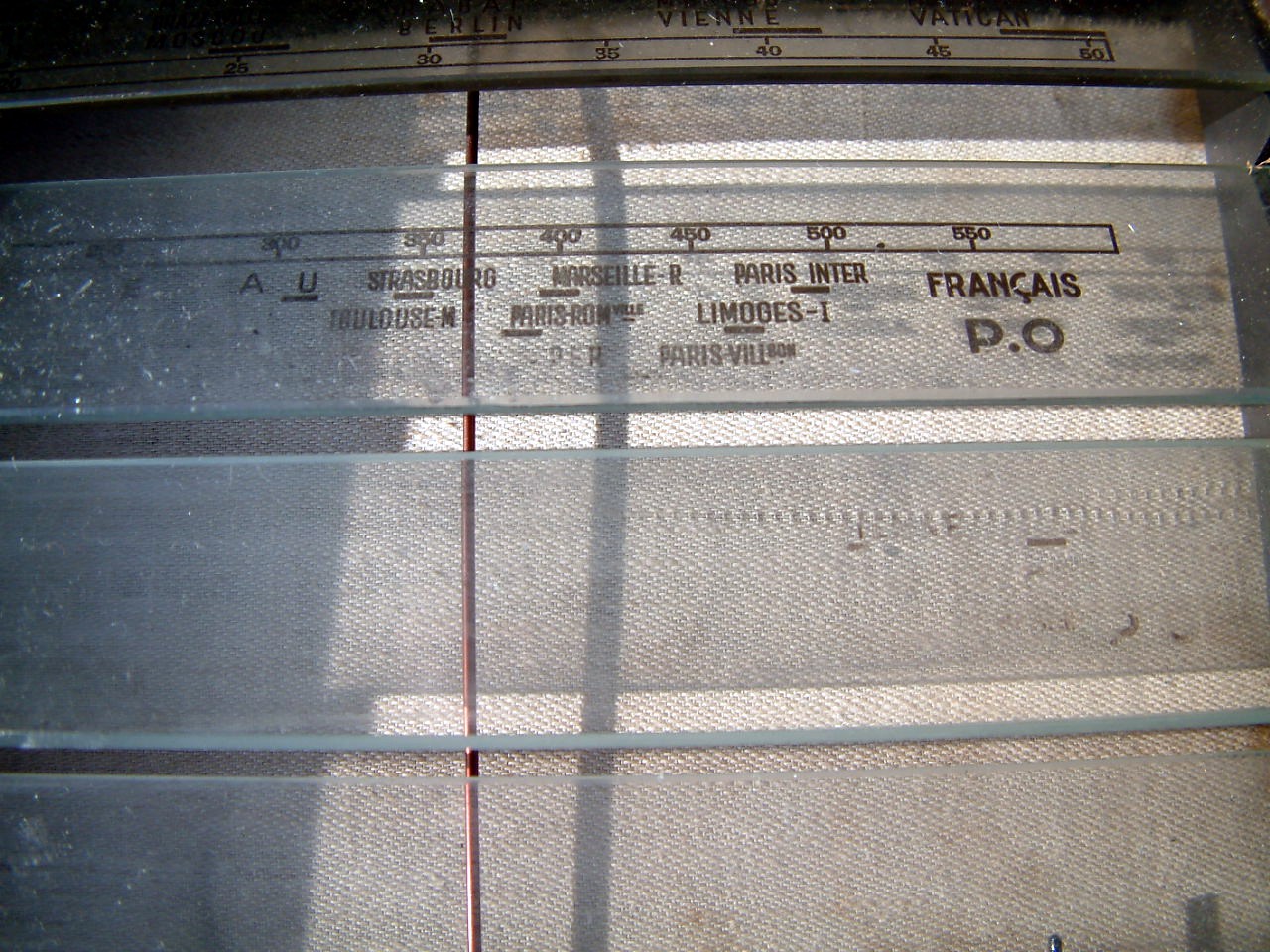
Ce poste est en cours de réparation, il est équipé de 5 tubes :

6H8MG    pentode et diodes
6M7         pentode
6E8MG    hexode et  triode

25L6GT   bf
25Z6G     redressement

Le schéma qui ressemble le plus est celui du poste RIBET-DESJARDIN modèle SUPER-DIVETTE 1941.
Dans ce poste, on trouve une 6K7 à la place de la 6M7 et une 6Q7  à la place de la 6H8. 

Mais il semble venir de Boulogne, sous le nom de B147 de la SREB. Si vous avez quelques informations sur lui, je suis preneur. Quelle est cette marque ? Combien de postes produits ?

Vous verrez aussi que les inscriptions du cadran sont en partie effacées sur les verres. Je serai intéressé de refaire les quadrants avec un modèle graphique.


Vous avez admiré la technique de câblage de l'époque ! 
Pour dépanner en profondeur, il faut tout dessouder !

Malgré tout,  on ne peut pas rester insensible à ce genre de poste BCL tout public, avec lequel beaucoup de jeunes radioamateurs ont fait leurs premiers pas, en ondes courtes sur la bande 40 mètres en AM !

Qui se souvient de F9SA (le savant atomique) avec sa station et sa façon de parler à la Pierre Dac. Ou alors c'était lui en personne, mais ses QSO étaient extraordinaires. C'était de la radio je vous le dis !


Contact :   f6agv AT free.fr

lundi 6 février 2012

FFF INFORMATIONS au 6 février 2012

http://www.claudechappe.fr/tour.php?NumTour=499

Site à voir absolument !

Activation tour Chappe et F-FF 378. Noisy sur École. Dépt de la
Seine et Marne 77.

Bonsoir, bonjour à toutes et à tous,

Demain matin, mardi 07 fév. 2012, en compagnie d'YL, nous serons F5MCC/p
sur la tour Chappe de Noisy sur École Seine et Marne et sur le F-FF 378, la
forêt domaniale des Trois Pignons, 2305 ha, gestion : ONF.

Référence de la tour : TC 77 NO.

Locator : JN 18 gj.     Coordonnées WGS 84 : 48° 23' 43,3"" N  002 ° 32'
34,2" E. Altitude : 121 m. Mécanisme : 9 m.
Lieu-dit : Le télégraphe de Noisy.

Heures modes et fréquences habituels (80m puis 40m J3e et A1a
prioritaire).

F5MCC " JIM "

samedi 4 février 2012

IARU CONSTITUTION


ARTICLE I -- NAME, OBJECTIVES, DEFINITIONS, AND STRUCTURE

1. The name of this organization is the International Amateur Radio Union (IARU), hereinafter also referred to as the IARU.
2. Its objectives shall be the protection, promotion, and advancement of the Amateur and Amateur-Satellite Services within the framework of regulations established by the International Telecommunication Union, and to provide support to Member-Societies in the pursuit of these objectives at the national level, with special reference to the following:
a) representation of the interests of amateur radio at and between conferences and meetings of international telecommunications organizations;
b) encouragement of agreements between national amateur radio societies on matters of common interest;
c) enhancement of amateur radio as a means of technical self-training for young people;
d) promotion of technical and scientific investigations in the field of radiocommunication;
e) promotion of amateur radio as a means of providing relief in the event of natural disasters;
f) encouragement of international goodwill and friendship;
g) support of Member-Societies in developing amateur radio as a valuable national resource, particularly in developing countries; and
h) development of amateur radio in those countries not represented by Member-Societies.
3. Within this Constitution, the following terms shall have the meanings defined below.
Amateur Service: A radiocommunication service for the purpose of self-training, intercommunication and technical investigations carried out by amateurs, that is, by duly authorized persons interested in radio technique solely with a personal aim and without pecuniary interest.
Amateur Satellite Service: A radiocommunication service using space stations on earth satellites for the same purposes as those of the amateur service.
National Amateur Radio Society: A noncommercial association of radio amateurs, devoted to the objectives set forth in the preceding section of this Constitution and substantially covering by influence and recognition the country and/or territories which it represents.
Member-Society: A national amateur radio society that has been accepted for membership in the IARU
Region: A geographical area, the boundaries of which are defined in the Bylaws. Unless otherwise specified in the Bylaws, the Regions shall correspond to those into which, for frequency allocation purposes, the world has been divided by the International Telecommunication Union.
International Secretariat: The Member-Society elected to discharge the responsibilities enumerated in Article V.
Bylaws: The operative procedures of the IARU adopted under the provisions of this Constitution for the governance of its affairs.
4. In this Constitution and in the Bylaws of the IARU, words importing only the masculine gender include the feminine gender and the neutral gender; words importing only the singular number include the plural number, and vice versa; and words importing persons shall include corporations. Headings, marginal notes, and numbering of Articles and Paragraphs are inserted for ease of reference only and do not form part of this Constitution, nor shall they affect its interpretation.
5. The official language of the IARU is English.
6. The IARU is composed of the following:
a) the Member-Societies (Article II);
b) the Administrative Council (Article III );
c) The Regional Organizations (Article IV).
7. The authority of the IARU resides collectively in the Member-Societies, who exercise this authority by voting as set forth in Articles VI and VII.
8. The structure and operation of the IARU shall be set forth in this Constitution and Bylaws.
9. No mutual financial obligations or responsibilities exist between entities or the IARU except as set forth in this Constitution; however, special arrangements may be made.

ARTICLE II -- MEMBER-SOCIETIES

1. The membership of the IARU shall consist of its Member-Societies.
2. There shall be only one Member-Society representing a country or separate territory.
The Constitution and Bylaws of the IARU , and proposals adopted by vote of the Member-Societies in accordance with Article VI of this Constitution, shall be binding upon Member-Societies. Member-Societies shall also adhere to the Constitution, Bylaws and Rules of their regional organizations.
4. Member-Societies retain their complete autonomy with respect to their internal affairs.
5. A Member-Society has the right to:
a) cast its vote on all IARU proposals published in the Calendar;
b) present proposals in accordance with Article VI, paragraph 2 for vote by Member-Societies;
c) represent IARU in its country and/or territory; and
d) participate in the activities and conferences of its own regional organization in accordance with the Constitution, Bylaws, and Rules of its own regional organization.
6. Member-Societies shall have the rights, duties, and obligations as defined in the Bylaws of the IARU.
7. No Member Society shall, by virtue or its membership, be required to act in a manner that is contrary to the laws of its country.
8. Member-Societies shall have no financial obligations to the IARU; however, there may be financial obligations between a Member-Society and its regional organization.
9. Applications for membership shall be reviewed by the appropriate regional organization, and then processed by the Administrative Council in accordance with procedures set out in the Bylaws.
10. A Member-Society may resign its membership in the IARU by submitting written notice to the Secretary of the appropriate regional organization. The resignation shall become effective upon publication in the Calendar.
11. The rights of a Member-Society may not be suspended, nor may membership in the IARU be terminated, unless:
a) The Member-Society has failed to fulfill its duties under this Constitution;
b) The Member-Society has acted contrary to the interests of Amateur Radio or the IARU; or
c) The Member-Society no longer adequately represents the interests of radio amateurs throughout its country and/or separate territory.
12. Procedures for temporary suspension of rights, and for termination of membership, shall be established in the Bylaws. 'Termination shall be by vote of the Member-Societies as described in Article VI.

ARTICLE III -- ADMINISTRATIVE COUNCIL

1. The policy and management of The IARU shall be carried out by the Administrative Council. The Administrative Council shall:
a) coordinate the representation or the interests of amateur radio at international telecommunications conferences with the regional organizations, under the direction of the President;
b) establish long-range planning in close cooperation with the regional organizations to preserve the basic purposes of amateur radio;
c) serve as coordinator between the regional organizations on all matters of mutual interest;
d) formulate such proposals for consideration by the Member-Societies as may be necessary to further the objectives of the IARU; and
c) adopt such resolutions and recommendations as will facilitate the functioning of the IARU.
2. The members of the Administrative Council shall be the President, the Vice President, the Secretary, and two members from each of the regional organizations. No member may have a professional interest which conflicts with the objectives of the IARU.
3. President.
a) The President shall be a Radio Amateur, and a member of a Member-Society.
b) The term of office of the President shall be for a period of five years from the date of ratification of his nomination, and he shall remain in office until the nomination of his successor has been ratified.
c) No later than 12 months prior to the expiration of the term or office of the President then in office, the International Secretariat shall initiate discussions with the Administrative Council to identify suitably qualified candidates available to serve as President. The nomination of a single candidate shall be made by the International Secretariat, but not until agreement has been reached between the International Secretariat and the Administrative Council that the candidate is suitably qualified.
d) A President shall be eligible for re-election.
e) The nomination of a President by the International Secretariat shall be subject to ratification by a vote of the Member-Societies in accordance with Article VI.
f) The office of President shall become vacant if the President:
1)dies,
2) gives notice in writing of his resignation to the Secretary, or
3) is removed by the adoption of a joint proposal put forward by at least 10% of the Member-Societies in accordance with the procedure described in Article VI.
4. The president shall have general supervision of the affairs of the IARU in accordance with formulated policies, and shall serve as chairman of the Administrative Council.
5. The qualifications, method of election, and term of office for the Vice President shall be identical with that of the President.
6. The Vice President shall serve in the absence of the President and shall be responsible for such matters of general supervision as may be delegated to him by the President.
7. In the event of a vacancy in the office of President, the Vice President shall succeed him. In the event of a vacancy in the office of the Vice President, the office shall be filled in accordance with the procedure described in Article III, paragraph 3.
8. The Secretary shall be designated by the International Secretariat and shall serve for a term determined by that Member-Society.
9. The Secretary shall manage the routine affairs of the IARU under the direction of the President.
10. The members of the Administrative Council from the regional organizations shall be Radio Amateurs and members of Member-Societies of their respective regional organizations. They shall be elected according to the rules of, and serve for a term determined by, their respective regional organizations. From each regional organization at least one, and wherever possible both, of the members shall be members of their regional executive committee.
11. The expenses of participation in the work of the Administrative Council by the President, Vice President, and Secretary, together with the administrative expenses associated with the holding of a meeting, shall be borne by The International Secretariat; the expenses of the members from the regional organizations shall be borne by their respective regional organizations.
12. Five members, including at least one from each regional organization and either the President or the Vice President, shall constitute a quorum.
13. Each member of the Administrative Council shall have one vote, except that the President shall vote only in the event of a tie.
14. Normally, the Administrative Council shall meet annually at a time and place to be determined at the previous meeting. Additional meetings of the Administrative Council may he called by the President or at the joint request of the regional organizations. In the event of a member of the Administrative Council not being able to attend a meeting of the Administrative Council, the executive committee of the regional organization shall provide a suitably qualified alternate.
15. Between meetings, decisions may be made by correspondence or other means.
16. The Administrative Council may adopt rules governing its operations in addition to those specified herein.

ARTICLE IV -- REGIONAL ORGANIZATIONS

1. The regional organizations are formed by Member-Societies representing the countries or separate territories in the respective Regions. The boundaries of the regional organizations correspond to those of the Regions. The regional organizations shall be referred to as "IARU, Region [ ]."
2. There shall be only one regional organization in each Region.
3. The objectives of the regional organizations shall be in accordance with Article I, paragraph 2 of this Constitution.
4. Each regional organization shall operate autonomously under its own regional constitution, and in accordance with the IARU Constitution.
5. Each regional organization shall have its own management and finances.
6. The management of a regional organization is carried out by an executive committee, the members of which are elected by the Member-Societies of the regional organization under the regional constitution.
7. Each regional organization shall ensure that its Member-Societies are actively supporting, in the countries or separate territories that they represent, the objectives of the IARU as set forth in Article I, paragraph 2.
8. Each regional organization shall participate actively in the work of the Administrative Council and shall inform the Administrative Council of significant activities within its Region.

ARTICLE V -- THE INTERNATIONAL SECRETARIAT

1. The Member-Societies shall elect one of their number willing to and capable of serving as the International Secretariat of the IARU.
2. The term of service of a Member-Society as International Secretariat shall continue until the election of a successor.
3. The operating expenses of the IARU shall be borne by the International Secretariat: however, it shall be under no obligation to bear expenses on behalf of the IARU beyond those that are incidental to its discharging the responsibilities enumerated in this Constitution.
4. The International Secretariat shall maintain the official records of the IARU and shall be the custodian of any property and funds belonging to the IARU. In the event of a transfer of the International Secretariat, all records, and control of all property and funds of the IARU shall be transmitted promptly to the successor.
5. The Administrative Council may establish bank accounts in the name of the IARU.
6. At least twice a year, the International Secretariat shall issue a periodical bulletin named The Calendar to all Member-Societies and to the members of the regional executive committees. The Calendar shall contain all proposals to be considered by the Member-Societies and other information as directed by the Administrative Council.

ARTICLE VI -- VOTING BY MEMBER-SOCIETIES

1. In the consideration of proposals brought before the IARU in accordance with this Constitution, each Member-Society shall have one vote.
2. A Proposal may be made by any Member-Society through its regional organization, which shall transmit it to the Administrative Council for publication in the next issue of the Calendar. Publication shall be accompanied by explanatory comment. Proposals also may be made by the regional organizations and the Administrative Council.
3. A Member-Society shall cast its vote in writing so that it is received by the International Secretariat not later than five months after publication of the Calendar containing the proposal. Votes received late shall not be counted.
4. After voting is completed, the Administrative Council shall publish the results in the next issue of the Calendar, including a list of Member-Societies voting in favor, those voting against, those recording an abstention, and all explanatory statements submitted for publication by Member-Societies.
5. Except for amendments to the Constitution and the termination of membership of a Member-Society, proposals shall be deemed adopted upon the casting of affirmative votes by a simple majority of the Member-Societies who have submitted, within the specified time, a vote or abstention, either on that proposal or in response to one of the three preceding issues of the Calendar which contained proposals for consideration by the Member-Societies.
6. The termination of membership of a Member-Society shall require a vote in accordance with the procedure described in Article VI, paragraph 5, except that a two-thirds majority shall be required.

ARTICLE VII -- AMENDMENTS

1. This Constitution may be amended by proposal in the Calendar, subject to a vote in accordance with the procedure described in Article VI, paragraph 5, except that a two-thirds majority shall be required.
2. Bylaws may be adopted or amended by proposal in the Calendar, subject to a vote in accordance with the procedure described in Article VI, paragraph 5, of the Constitution.

BYLAWS OF THE INTERNATIONAL AMATEUR RADIO UNION

Applications for Membership
1. Applications for membership in IARU shall be forwarded by the applicant society to the secretariat of the appropriate regional organization. As soon as practical, the regional organization shall forward to the Administrative Council any complete application that it has received, along with either a favorable or unfavorable finding with respect to the qualifications of the applicant, and any additional comments which it may wish to make. In the event an incomplete application is received or additional information is desired, the regional secretariat shall endeavor to obtain the information from the applicant.
2. An applicant for membership shall include the following in its application:
a) a copy of its constitution or other governing document;
b) a list of its officers, the total number of its members, the number of members who are licensed to transmit in the Amateur Service, and the number of licensed operators in its country and/or separate territory;
c) satisfactory evidence that it:
1) adequately represents the interests of amateurs throughout the country and/or separate territory which it proposes to represent:
2) has the ability to meet its financial obligations as a member of the Union; and
3) is legally able to act in the furtherance of IARU objectives within its country and/or separate territory; and
d) a declaration that the applicant society will adhere to the Constitutions of both the IARU and the respective regional organization.
3. Within three months of receiving an application for membership on which a regional organization made a favorable finding, the Administrative Council shall publish in the Calendar a proposal that the applicant be admitted to membership, with sufficient information to permit Member-Societies to make an informed decision.
4. The Administrative Council shall review applications on which a regional organization has made an unfavorable finding. If in the opinion of the Administrative Council there is insufficient basis for the unfavorable finding, the application shall be returned to the regional organization with the request either that it be given further consideration, or that the basis for the finding be further explained.
Duties and Obligations of Member-Societies
5. Member-Societies shall seek to promote and defend the objectives and principles established in the Constitution and Bylaws of the IARU and the Constitution, Bylaws and Rules of their own regional organization.
6. A Member-Society has the obligation to represent and promote IARU in its country and/or territory and shall ensure that the principles, resolutions and recommendations of the IARU are made known to all amateurs within its area of influence.
7. A Member-Society shall attend or be represented at its own regional conference in accordance with the Constitution, Bylaws, and Rules of its regional organization.
8. A Member-Society shall respond to all inquiries originating from the Regional and/or International Secretariat. It shall provide the Regional Secretariat with an annual report, notices of changes of addresses and/or officers, copies of substantive correspondence sent to the International Secretariat, and such other information that is relevant to its activities within the IARU.
9. Every Member-Society shall advise the Secretary of any conflicts that may exist between the Constitution or the Bylaws of IARU, or any proposals adopted by the IARU. and the laws and policies of its country.
Temporary Suspension of Rights of a Member-Society
10. At the request of a regional organization, the Administrative Council may place the rights of a Member-Society temporarily in abeyance if in its opinion there exist sufficient grounds for doing so in accordance with Article II, paragraph 11 of the Constitution.
Termination of Membership
11. If it appears to the Administrative Council, whether from a report from the Secretary, regional organization, or otherwise, that a Member-Society's breach of the conditions enumerated in Article II, paragraph 11 of the Constitution is not of a temporary nature, the Administrative Council may:
a) take no further action in the matter;
b) reconsider the matter at a later date;
c) obtain further information including a report from the relevant regional organization and such other information by such means and in such time as it decides;
d) direct the Secretary to advise the Member-Society of the charge against it and require the Member-Society to provide an answer thereto in such time as the Administrative Council shall specify; or
e) take such other action as it considers appropriate.
12. If it appears to the Administrative Council that it is proper to do so, it may make a proposal for the termination of the membership of a Member-Society, provided that no such proposal shall be made unless the action referred to in Bylaw 11(d) has been taken and the Administrative Council has considered any answer given in response thereto.
13. A proposal for the termination of the membership of a Member-Society shall be accompanied by a suitable explanation therefor and a copy of the answer, if any, made by the Member-Society.
Regions
14. The Regions shall be defined as follows:
Region 1
Includes the area limited on the east by line A (lines A, B and C are defined below) and on the west by line B, excluding any of the territory of Iran which lies between these limits. It also includes that part of the territory of Turkey and the Union of Soviet Socialist Republics lying outside of these limits, the territory of the Mongolian People's Republic, and the area to the north of the USSR which lies between lines A and C.
Region 2
Region 2 includes the area limited on the east by line B and on the west by line C.
Region 3
Region 3 includes the area limited on the east by line C and on the west by line A, except the territories of the Mongolian People's Republic, Turkey, the territory of the USSR and the area to the north of the USSR. It also includes that part of the territory of Iran lying outside of those limits.
The lines A, B and C are defined as follows:
Line A: Line A extends from the North Pole along meridian 40 degrees East of Greenwich to parallel 40 degrees North; thence by great circle arc to the intersection of meridian 60 degrees East and the Tropic of Cancer; thence along the meridian 60 degrees East to the South Pole.
Line B: Line B extends from The North Pole along meridian 10 degrees West of Greenwich to its intersection with parallel 72 degrees North; thence by great circle arc to the intersection of meridian 50 degrees West and parallel 40 degrees North; thence by great circle arc to the intersection of meridian 20 degrees West and parallel 10 degrees South; thence along meridian 20 degrees West to the South Pole.
Line C: Line C extends from the North Pole by great circle arc to the intersection of parallel 65 degrees 30 North with the international boundary in Bering Strait; thence by great circle arc to the intersection of meridian 165 degrees East of Greenwich and parallel 50 degrees North; thence by great circle arc to the intersection of meridian 170 degrees West and parallel 10 degrees North; thence along parallel 10 degrees North to its intersection with meridian 120 degrees West; thence along meridian 120 degrees West to the South Pole.
Correspondence Procedure
15. A copy of all correspondence from a Member-Society to the Administrative Council, or from the International Secretariat to a Member-Society, including correspondence on behalf of the Administrative Council to a Member-Society, shall be sent to the Secretary of the appropriate regional organization.
Selection, Resignation, and Replacement of the International Secretariat
16. Nomination of an IARU Member-Society to serve as the International Secretariat may be made either by a Member-Society, a regional organization or the Administrative Council and shall be accompanied by a supporting rationale. In addition, the nominated Member-Society must attest to its willingness to serve and its ability to fulfill the requirements and obligations as described in Article V of the Constitution.
17. If the Member-Society serving as the International Secretariat wishes to resign, it shall submit its resignation in writing to the Administrative Council. The resignation shall be published in the next issue of the Calendar together with an invitation for nomination of a successor.
18. A proposal to replace a Member-Society serving as the International Secretariat shall include a nomination of a successor.